
Pencil Review, Pricing & Alternatives (2026)
AI ad creation, audience insight and campaign workflow automation
Last updated: October 26, 2026
What is Pencil?
Pencil is a Brandtech Group advertising platform for generating text, image and video creative, researching audiences, and managing campaign workflows. It serves solo marketers, growing teams, and enterprise brands. Core costs $14 per month monthly or $11 per month billed annually, with 50 monthly generations. A guided trial allows six free ads before paid access is required.
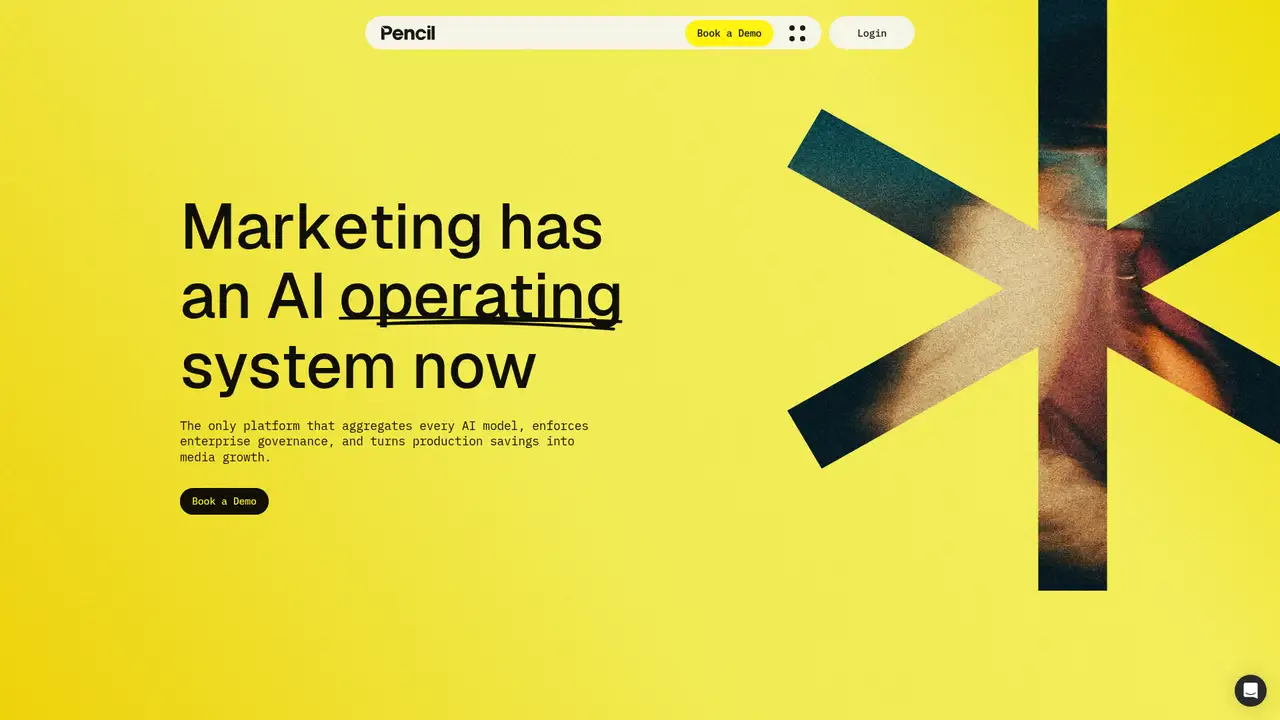
Pencil is an AI advertising creative platform founded in 2018 by Will Hanschell and Sumukh Avadhani. The Brandtech Group acquired 100% of Pencil in June 2023 and launched Pencil Pro for global brands, with the acquisition price undisclosed. Campaign reported $3.9 million in funding before the deal. Pencil says it produced more than one million creative executions during the 12 months preceding its 2023 announcement, while prediction data covered more than $1 billion in media spend. Those figures are company or third-party claims from 2023, rather than independently audited current metrics. The platform generates text, images, video and advertising creative, then connects audience insight, production, launch and performance tracking. It supports Facebook, Instagram, TikTok, YouTube, Google Display, DV360 and LinkedIn.
A typical Pencil workflow begins with a brief, uploaded brand guidelines, existing assets or a CSV. AI Agents can research audiences, identify consumer insights, suggest campaign ideas, generate advertisements and write video scripts. Teams can then resize creative, remix video, swap products and produce variants, with Brand Library rules applied across the work. Realtime AI insights and Scores provide feedback before launch. Pencil also connects creative with campaign publication and tracking across Facebook, Instagram, TikTok, YouTube, Google Display, DV360 and LinkedIn. Human review is required before automatic publication under the Acceptable Use Policy. That requirement makes Pencil better suited to supervised creative operations than fully unattended advertising. The workflow combines research, ideation, production and channel execution inside one advertising-focused system.
Pencil says its current provider mix includes Anthropic, OpenAI, Google, Kling and other providers, although it does not publish a complete model-version list. Agents combine instructions, uploaded brand material, briefs, CSVs, web search and Pencil features. AI Agents launched on July 10, 2025, adding custom agents and chained workflows, with Google Trends and bulk campaign-feed generation listed as planned integrations. Pencil and GWI launched an Insights Agent on May 18, 2026, bringing real-time consumer intelligence into creative workflows. On September 28, 2026, Pencil launched Scribble, which interprets briefs and coordinates agents, models and skills. Pencil says testing showed 60 to 80 percent less time on repetitive tasks. Further media-buying linkage was planned for later in 2026, not delivered at launch.
Core costs $14 per month month to month, or $11 per month billed annually, and includes 50 generations monthly, one workspace, self-serve AI Agents, realtime insights, Scores, channel launch and tracking, and chat support. Growth costs $55 monthly, or $44 billed annually, and raises the allowance to 250 generations while adding unlimited workspaces, lower generation cost, and direct product-team and roadmap access. Annual billing lowers the listed monthly rate by about 21 percent. Pro uses custom pricing and committed-consumption terms, with unlimited generations subject to the commercial arrangement and possible charges beyond quota. Guided sign-up lets users create six ads free, but full access requires payment. In September 2026, Pencil renamed generations as credits, introduced fractional model rates and still published no separate dollar price per credit.
Pencil limits Core and Growth users to their monthly generation allocations, while Pro pricing and overage terms require a commercial agreement. Output rights, indemnity and protections also vary by plan and model. Enterprise terms include no-training provisions, data ringfencing and indemnification, while Marketplace Models are optional, provided as-is and excluded from standard protections such as output indemnity. AdCreative.ai is a closer lower-cost comparison for performance creative and high-volume static ads. Smartly.io and Celtra are stronger choices for large-scale production and distribution, while Omneky focuses on personalized cross-platform creative. Pencil also requires human review before automatic publication. Pick Pencil if your team needs supervised ad generation tied to audience research, brand rules, creative scoring and launch workflows across multiple channels.
Who is Pencil best for?
- Solo marketers producing recurring text, image and video ads.
- Growing teams that need 250 monthly generations and unlimited workspaces.
- Brand teams coordinating agents, briefs, guidelines and creative variants.
- Advertisers launching and tracking creative across multiple named channels.
Pencil Pricing (2026)
Pricing model: Paid. All prices in USD.
| Plan | Price | What you get |
|---|---|---|
| Core | $14/month or $11/month billed annually | 50 generations per month, one workspace, self-serve agents, realtime insights and Scores, channel launch and tracking, and chat support. |
| Growth | $55/month or $44/month billed annually | 250 generations per month, unlimited workspaces, lower generation cost, and all Core features. |
| Pro | Custom | Unlimited generations use committed-consumption pricing. Bulk feeds, unlimited users, brands and markets, governance controls and enterprise terms are included; extra charges can apply beyond quota. |
Pros and Cons
Pros
- Core and Growth publish clear monthly and annual-billing prices.
- Agents cover research, ideation, generation, scripting and creative variants.
- Launch and tracking span seven named advertising channels.
- Enterprise terms include no-training, data ringfencing and governance controls.
Cons
- Core and Growth stop at their monthly generation allocations.
- Pro pricing and committed-consumption terms are custom.
- Marketplace Models do not carry standard output indemnity protections.
Who should look elsewhere?
- Teams seeking a self-hosted advertising creative platform.
- Buyers requiring a fully public per-credit price.
- Unsupervised systems that publish ads without human review.
Technical Details
Frequently Asked Questions
How much does Pencil cost?
Pencil Core costs $14 per month when billed monthly, or $11 per month billed annually. Growth costs $55 monthly, or $44 monthly billed annually. Pro uses custom pricing with committed-consumption terms. Pencil also offers a guided trial that allows six ads before full platform access requires a paid plan.
Does Pencil have a free plan?
Pencil does not list a continuing free plan. Guided sign-up allows a user to create six ads free, but full platform access requires a paid subscription. Core includes 50 generations per month, while Growth includes 250. Pencil renamed generations as credits in September 2026, with more granular per-model rates and fractional credit charges.
How does Pencil compare with AdCreative.ai?
AdCreative.ai is described as a closer lower-cost comparison for high-volume performance creative, especially static creative. Pencil covers text, images, video, audience research, agents, Scores and launch or tracking across seven named channels. Pencil suits teams combining research and supervised production, while AdCreative.ai is the more direct comparison for performance-focused creative volume.
Does Pencil train AI models on customer data?
Pencil’s enterprise terms say it will not use Customer Content to train or improve AI systems, and will not allow third-party model providers to do so. A custom model may be trained only for the customer’s workspace. Enterprise terms also address data ringfencing, while the DPA limits personal-information processing to specified business purposes and the direct business relationship.
Can businesses use Pencil outputs commercially?
Pencil supports commercial advertising use, but rights and protections depend on the plan, model and applicable terms. The Terms FAQ says customers own inputs and outputs, and Pencil offers IP indemnification for qualifying outputs. Marketplace Models are an exception and are provided as-is. Core terms contain narrower rights language than Pro, so enterprise buyers should review the order and model terms.
Best Pencil Alternatives in 2026
These tools do the same job as Pencil, with different pricing, limits and trade-offs.